
Blog
Desert Rose (Adenium) Care: Light, Watering and Dormancy

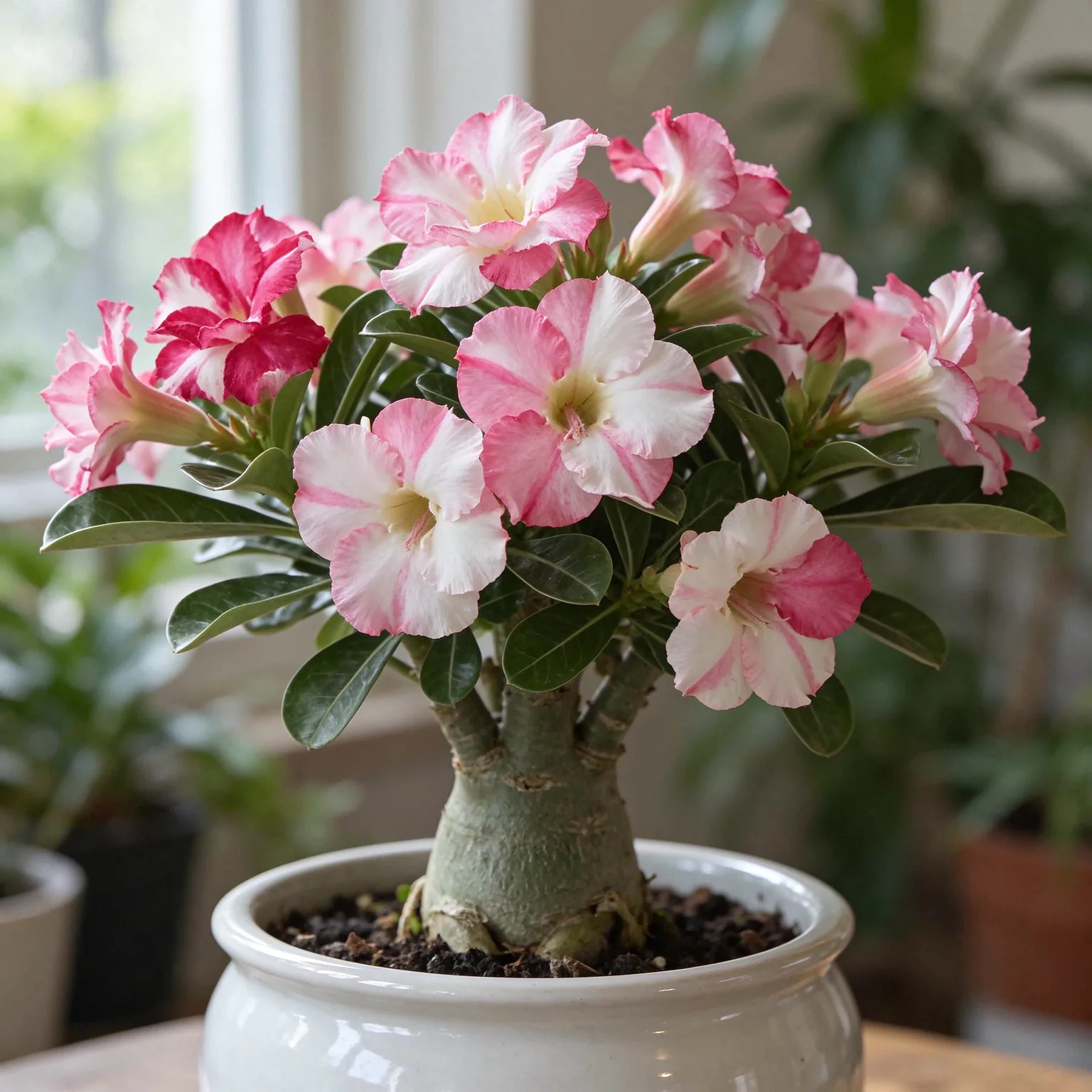
Desert rose (Adenium obesum) is not a rose, not a desert plant in the way people imagine, and not difficult — as long as you understand one thing: it stores water in its swollen base and would rather be dry than wet.
Almost every dead desert rose we hear about was killed by kindness: too much water, too rich a compost, too warm a winter. This guide covers what actually matters, including what to do in the first week after a bare-root plant arrives.
Light: full sun, no compromise
Desert rose wants at least six hours of direct sun, and more is better. On a south-facing windowsill indoors, or outside on a patio in summer, it will flower from spring through autumn.
In lower light it survives but stops flowering, shoots become long and weak, and the plant slowly loses its compact shape. If your only window is north-facing, a grow light is a better investment than more fertiliser.
Water: soak, then dry out completely
This is the single rule that keeps a desert rose alive:
- Water thoroughly until it runs out of the drainage holes
- Wait until the compost is completely dry before watering again — not damp, dry
- In summer that might mean every 7–10 days; in winter it might mean once a month, or not at all
Never let the pot stand in a saucer of water. The caudex — the swollen base — rots from the bottom up, and by the time you see it, the plant is usually gone.
Compost: gritty, not rich
Use a free-draining mix, not general potting compost. A workable recipe:
- 2 parts cactus or succulent compost
- 1 part pumice or coarse perlite
- A handful of horticultural grit on the surface to keep the neck dry
Repot only when the roots fill the pot, and go up one size at a time. Desert rose flowers better when slightly pot-bound.
Temperature
| Condition | Temperature | What happens |
|---|---|---|
| Ideal growing | 70–90°F (21–32°C) | Active growth and flowering |
| Comfortable minimum | 50°F (10°C) | Slow growth, may drop leaves |
| Danger zone | Below 40°F (4°C) | Frost damage to stems and caudex |
In zones 10–11 it can grow outdoors year round. Anywhere colder, it lives in a pot and comes indoors before the first frost.
The first week after a bare-root plant arrives
Bare-root adenium is shipped with the caudex exposed and no soil. It looks alarming; it is normal. Do this:
- Unpack and check the caudex is firm, not soft or mushy
- Pot it in dry-ish gritty mix, with the caudex sitting above the soil line
- Do not water for 5–7 days. Any cut or damaged root needs to callus first
- Keep it bright and warm, out of direct midday sun for the first week
- After a week, water thoroughly and let it drain
Expect it to look dormant for two to four weeks before new leaves appear. That is not a problem — the plant is rooting.
Dormancy: the part people misread
In winter, a desert rose in a cool room drops its leaves and stops growing. This is dormancy, not death. During this period:
- Water very sparingly — a light watering every 3–4 weeks at most
- Keep it cool (55–65°F) and bright
- Do not fertilise
- Do not panic when the last leaf falls
New growth in spring is the signal to resume normal watering and feeding.
Feeding and flowering
Feed every two to three weeks through the growing season with a low-nitrogen fertiliser (tomato feed works well). High nitrogen gives you leaves and no flowers.
Flowers appear on new growth, so a plant that never puts on new stems will never flower. If yours is all leaves and no buds, the usual cause is insufficient sun.
Pruning and shaping
Desert rose branches naturally, but you can shape it by cutting back a stem in spring. Cut just above a leaf node, and the plant will usually push two or three new shoots from that point. Wear gloves — the sap is irritating and toxic if ingested.
Common problems
| Symptom | Cause | Fix |
|---|---|---|
| Soft, squishy caudex | Rot from overwatering | Often fatal. Unpot, cut away soft tissue, dry and repot in dry mix |
| Yellow leaves in summer | Overwatering, or sudden cold | Let it dry out fully; check for draughts |
| No flowers for a whole season | Not enough sun | Move to full sun; reduce nitrogen |
| Sticky white specks | Mealybug or spider mite | Wipe with alcohol, treat with insecticidal soap |
| Leaves dropping in November | Normal dormancy | Nothing — reduce watering |
Is it safe around pets?
No. All parts of Adenium obesum contain cardiac glycosides and are toxic to cats, dogs and humans if eaten. Keep it out of reach, and wash your hands after handling the sap.
Frequently asked questions
How often should I water a desert rose?
Only when the compost is completely dry. In summer that is usually every 7–10 days; in winter, once a month or less.
Why is my desert rose not flowering?
Nine times out of ten it is light. It needs six or more hours of direct sun. The other cause is too much nitrogen fertiliser.
Can I grow it outdoors?
Year round in zones 10–11 only. Elsewhere, keep it in a pot and bring it in before the first frost.
Will it recover from a soft caudex?
Sometimes, if caught early. Cut away all soft tissue, let the cut callus in dry air for several days, then repot in dry gritty mix and do not water for a week.
Browse our desert rose bare-root plants — shipped with a firm, healthy caudex and our 30-day guarantee. Read our press page for care photos you can use.